SOUTH FLORIDA BASED · WORLDWIDE MARINE SERVICESERVICE ASSISTANTTalk to PELASTRION
Training & ongoing support

Know your vessel.
Build your capability.

Practical learning for the people who own, operate and service marine systems. Explore crew orientation, technical development and fleet support—or build a learning plan around the equipment aboard.

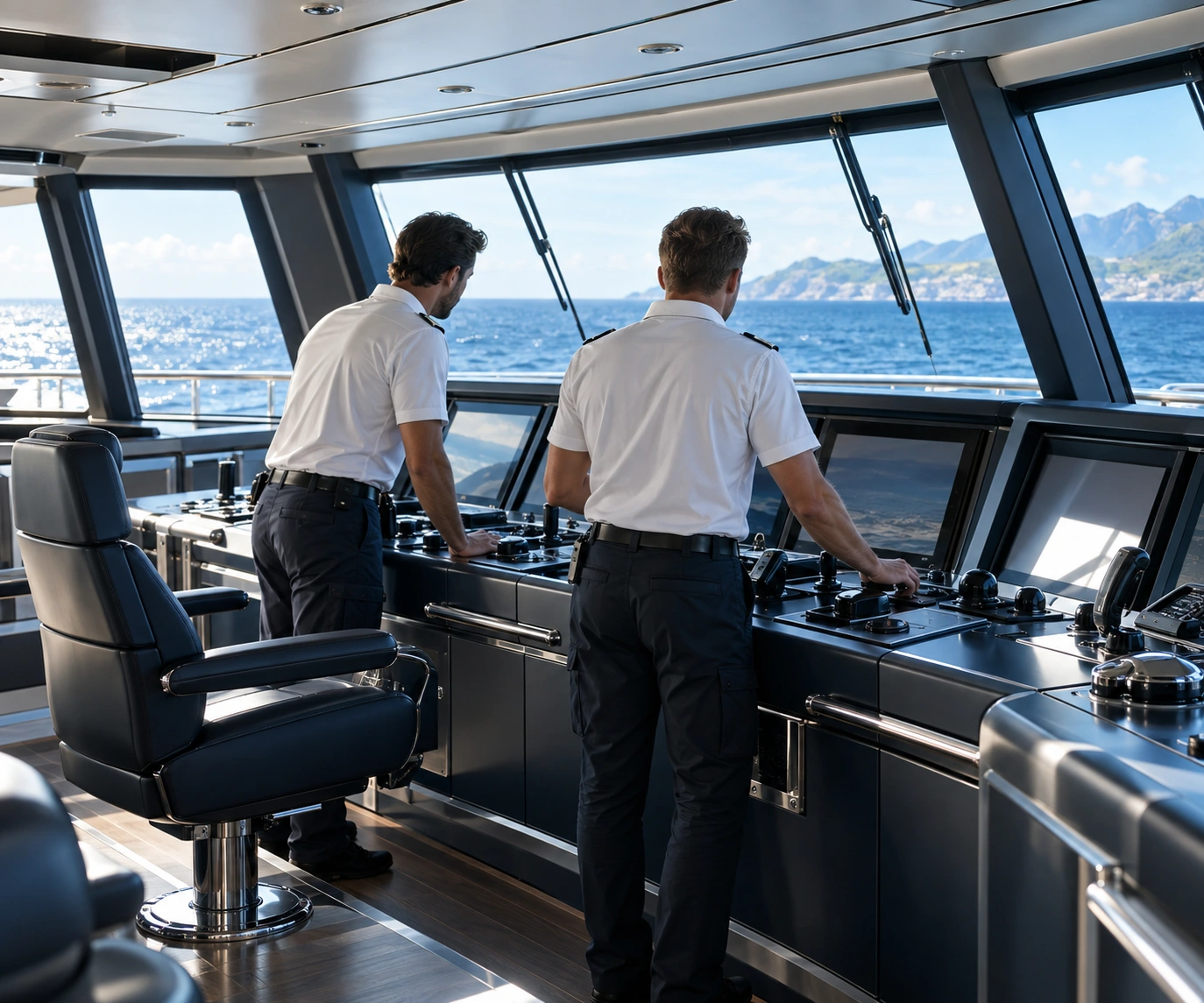
Illustrative marine specialists reviewing yacht bridge equipment
Practical knowledge. Better preparation.
Start with your goal

A learning plan.
Built around you.

Choose your role and tell the planner what you want to understand. It will turn your answers into a practical starting plan and a brief for a tailored training discussion.

PELASTRION · TRAINING ASSISTANT

Let’s plan your next step.

PELASTRION

Hi. What do you do, and what would you like to learn?

Guided support · nothing sent

Choose your path

Different roles.
A shared standard.

Build the knowledge that makes the next conversation, service visit or crew handover more effective.

01 · OWNERS, CAPTAINS & CREW

Operate with understanding.

Become familiar with what is installed, where the manuals are and how to describe a concern clearly.

  • Vessel systems, equipment records and manual orientation
  • Alarm recognition and useful fault reporting
  • Bridge-equipment familiarization and limitations
  • Crew handover, recurring tasks and escalation contacts
Take away: a vessel orientation checklist.Build a crew learning plan ↗
02 · MARINE TECHNICIANS & INSTALLERS

Develop technical depth.

Plan professional development around the systems you work with, your current experience and the competence each task requires.

  • Electrical systems and marine electronics pathways
  • Propulsion, HVAC and connected-system learning
  • Commissioning evidence and technical documentation
  • Manufacturer courses, independent credentials and renewals
Take away: a skills and credential development plan.Build a technical learning plan ↗
03 · FLEET MANAGERS & OPERATIONS

Keep every vessel aligned.

Make equipment records, planned work and service closeout consistent across vessels, locations and crew changes.

  • Equipment registers and maintenance planning
  • Port-call readiness and access requirements
  • Approval records and scope-change decisions
  • Open defects, limitations and follow-up ownership
Take away: a repeatable fleet support workflow.Build a fleet learning plan ↗
04 · SERVICE PROVIDERS & CONTRACTORS

Arrive ready. Close clearly.

Prepare for a professional working relationship with PELASTRION through clear qualifications, scope and delivery records.

  • Capability statements and credential scope
  • Site readiness, task planning and communication
  • Progress updates and change authorization
  • Test records, closeout packs and follow-up actions
Take away: an onboarding and delivery-readiness brief.Build a provider learning plan ↗
Practical learning library

Eight modules.
Knowledge you can use.

Short exercises turn a topic into a useful vessel record. Start with information already available; practical work must stay within the person’s competence and the vessel’s procedures.

01 Know what is aboard

Build one reliable record for each system: manufacturer, model, serial number, location, manual reference and responsible crew member. Add installation dates, warranty documents and known limitations where available.

Try it: Create a record for one system using its manual, existing register and externally visible label. Note missing information for the next service visit. Read the equipment-identification guide ↗

02 Turn an alarm into useful information

A clear fault record includes the exact displayed message, when it appeared, normal operating conditions, recent changes and the effect on the vessel. Keep observations separate from a suspected cause.

Try it: Describe a past alarm in five sentences: what, when, where, operational impact and actions already taken. Use an existing photograph if available. Prepare a useful service request ↗

03 Understand bridge and connected systems

Learn the different roles of navigation displays, radar, AIS, radio, satellite communications and forward-looking sonar. Find the applicable operating manuals and record the crew’s questions about equipment limitations, settings and handover.

Try it: List the information each bridge system provides and which manual explains its operation. Use manufacturer learning for the installed model. Explore FarSounder operator learning ↗

04 Build electrical-system awareness

Understand the difference between normal operation and electrical work. Identify the vessel’s drawings, equipment manuals, known restrictions and qualified escalation contacts. A planning exercise does not require live testing or access to exposed components.

Try it: Assemble the existing drawings, equipment details and fault history a marine electrician would need. Technicians can review an appropriate ABYC learning path. Explore ABYC education ↗

05 Prepare propulsion and outboard support

Match the engine to its manual and service history. Record hours, operating symptoms, maintenance already completed and the next planned service. Mercury outboards should be identified by their model and serial information so the correct guidance can be located.

Try it: Build an engine service brief from existing labels and records, then list the questions that remain for the technician. Find a Mercury owner manual ↗

06 Describe HVAC and onboard-system needs

Record the affected spaces, exact symptoms, equipment identification and operating conditions. Electrical, refrigerant and mechanical tasks may require different competencies and permissions; identify the need before defining the work.

Try it: Write a comfort-system brief that distinguishes the crew’s observations from the diagnosis that still needs to be made. Include timing and the effect on guests, crew or operations.

07 Prepare for a port call

Bring together the berth, arrival and departure window, local time zone, access arrangements, onboard contact, required work and operational constraints. Identify parts and documentation that need to be ready before attendance.

Try it: Prepare a brief for your next port call and mark every detail that still needs confirmation. Explore worldwide service planning ↗

08 Close the job and preserve the knowledge

Match the closeout to the agreed scope. Keep the work summary, relevant test records, installed-parts details, manuals, remaining defects and operating restrictions together. Give each follow-up action an owner.

Try it: Review a past service report and identify the information the next captain or technician would need. See how PELASTRION manages delivery ↗

Support through the vessel lifecycle

Keep knowledge
with the vessel.

A strong support record makes every next step easier—from the first fault report to the next crew change. Discuss a support scope built around your operation.

01 · BEFORE ATTENDANCE

Prepare the picture.

Collect equipment details, symptoms, existing photographs, timing, access and the questions that need answering.

02 · DURING THE WORK

Keep decisions clear.

Record agreed changes, progress, open questions and any operational restrictions that the crew needs to understand.

03 · AT HANDOVER

Transfer the knowledge.

Review the work summary, relevant results, updated manuals, configuration records and remaining actions.

04 · AFTER CLOSEOUT

Plan what comes next.

Revisit recurring faults, upcoming maintenance, equipment changes and familiarization for new crew.

Discuss training and ongoing support ↗
Go to the source

Official learning.
Direct access.

Explore independent training providers and original manufacturer resources. Enrollment, fees, prerequisites and credentials are managed by the named organization.

Resource links are provided for learning. They do not imply that PELASTRION is an accredited school or an authorized training provider for these organizations.

Learning connected to the work you do.

Explore the guide library, review qualifications, or prepare your next training conversation.

ServicesStart a conversation